Play and contact
We expect accessible routine blocks and rally depth from the softer supported face, while the 350 g setup allows ordinary net preparation without the mass demand of the attacking Pro frames.
The separate review claiming 360-370 g is not used. High pace can expose a less settled soft response and reduced finishing weight; a forgiving face still needs an early, supported racket position.
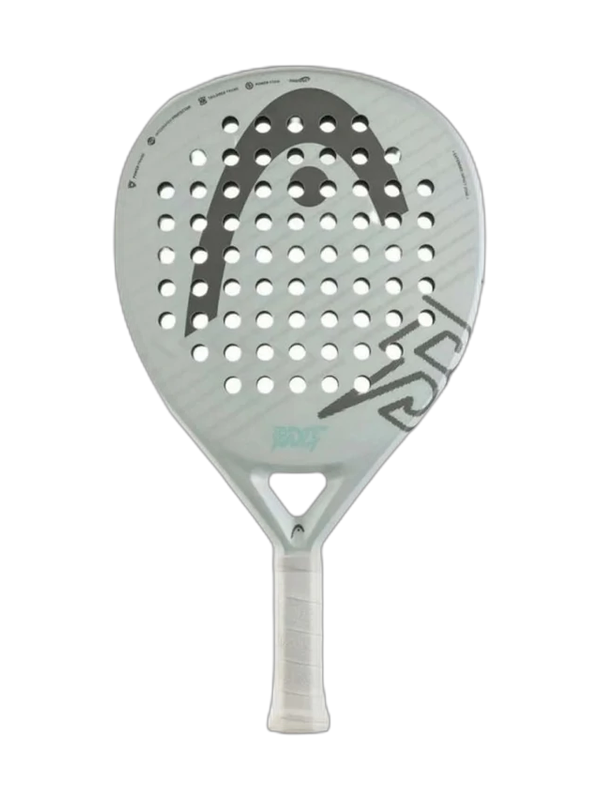
Specifications and exact identity
HEAD’s catalogue explicitly lists both 226206 and 226216 as Bolt 2026: each is a 350 g oversize teardrop with 265 mm balance and fiberglass surface. The exact 226216 retailer confirms the forgiving, softer-contact club-player brief.
Power
Attacking output concerns a prepared stroke, not just the rebound that helps a short defensive swing. Check whether a deliberately accelerated volley and overhead produce the depth you need.
Control
Control concerns predictable direction when you prepare the contact. That differs from how readily a racket rescues a mistimed stroke. Include both a placed volley and a controlled lob in your own comparison.
Maneuverability
Handling concerns preparation and getting ready for the next shot. Listed weight and balance describe context but do not measure swingweight. Grip and protectors change the finished setup.
Comfort
Comfort combines contact feel with the demands of repeated preparation. A soft core alone cannot establish the response of the entire racket or suitability for an existing physical complaint.
Forgiveness
Forgiveness combines access to useful contact with retained depth and direction when contact is imperfect. A large-looking head is not a measured map of useful response.
Who does this racket suit?
Try routine placement, compact defense, repeated net preparation and a full overhead with your normal grip. Choose according to your own contact pattern rather than the largest headline number.