Play and contact
Prepared central volleys, lobs and overheads are the reference contacts; passive rebound is considered separately from committed finishing. We have not performed a court test of this racket.
No K-count arithmetic, stiffness percentages or vibration percentages determine our score. This is not a transferred 2023 or 2025 assessment. Each dimension has a plausible ±1-point editorial scenario range; these are not confidence intervals. Grip, protector, specimen, temperature and player preparation can change the result.
Specifications and exact identity
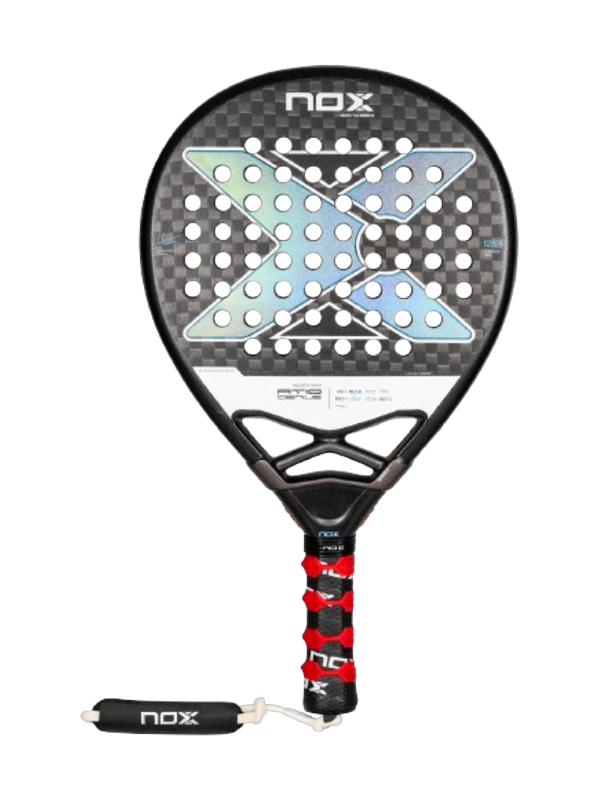
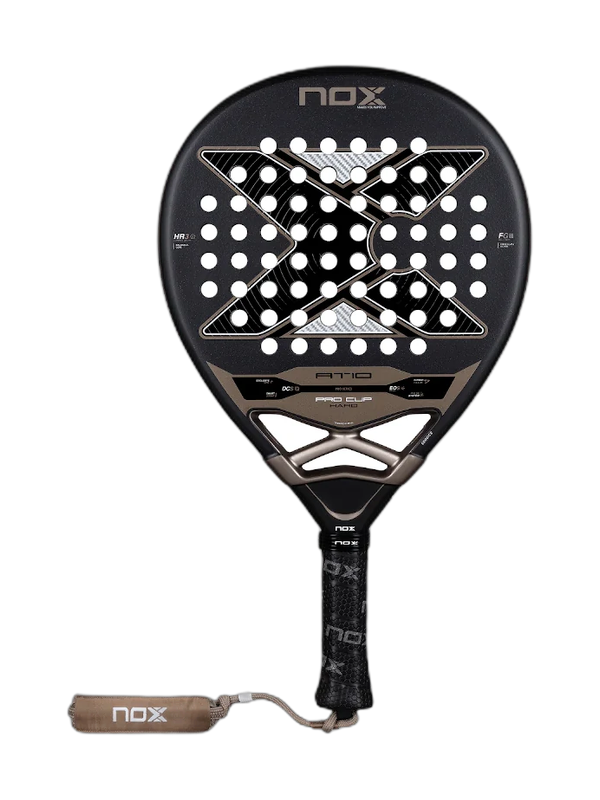
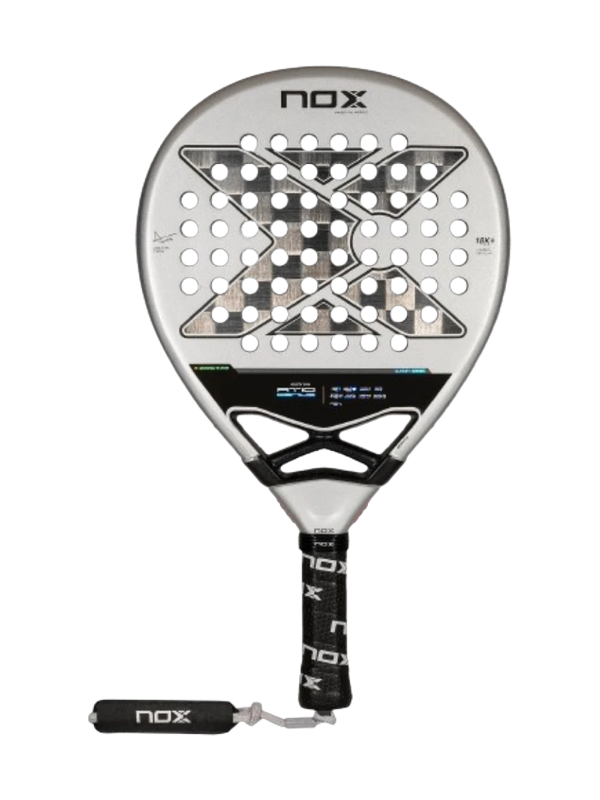
The 2024 Carbon 18K Alum AT10 has a teardrop/hybrid mold, 360–375 g range, carbon frame and MLD Black EVA. NOX explicitly binds the 2024 18K name to 18K Alum and declares this version’s feel intermediate. Its shared mold/core and the grip extended by 1 cm are documented.
Power
This is an editorial potential estimate with ±1-point scenarios.
Attacking output concerns a prepared stroke, not just the rebound that helps a short defensive swing. Check whether a deliberately accelerated volley and overhead produce the depth you need.
Control
The intermediate loaded response, supported carbon perimeter and hybrid central preparation offer strong predictable volley and lob potential; abrupt pace changes and incomplete preparation are the boundary.
Control concerns predictable direction when you prepare the contact. That differs from how readily a racket rescues a mistimed stroke. Include both a placed volley and a controlled lob in your own comparison.
Maneuverability
The shared moderate distribution, EOS Flap openings and extended grip support good routine preparation and recovery within 360–375 g; added grip mass and upper-range specimens constrain sudden resets.
Handling concerns preparation and getting ready for the next shot. Listed weight and balance describe context but do not measure swingweight. Grip and protectors change the finished setup.
Comfort
The layered core and grip interface moderate the intermediate face response while distribution tempers adult load, supporting good routine impact and repeated handling; upper-range mass and heavy-ball contact remain limits.