Strengths and tradeoffs
- Quick preparation and recovery in repeated net exchanges
- Useful overhead acceleration without a specialist finishing brief
- Predictable placement through compact, prepared strokes
- Low or wide contact can cost depth and direction
- Heavy incoming pace exposes the limits of imperfect contact
- Impact can feel sharper when you arrive late
Attack, then prepare again
At the net, the Motion makes sense for a player who changes direction often and wants to reset between volleys. The retained playing accounts support fast preparation and repeatable acceleration. That can help you keep an attacking position without needing a long swing for every ball.
Overheads reward an organised stroke. There is useful pace available, but the case for this racket is broader than maximum smash output. If your plan depends on finishing every high ball through sheer attacking authority, compare a more demanding attacking profile.
What changes when the incoming ball is heavy
Prepared blocks can give a predictable direction. Reaching the racket out late is a different situation: contact low on the face can leave the ball short, while a wide miss can disturb placement. Quick handling helps you prepare; it does not guarantee stability on every rushed counter.
Accounts of a compliant routine feel and sharper late-contact feedback should be read together. The Motion can be accommodating in normal play without feeling soft on a severe miss.
The 2025 Motion and its Speed Pro alternative
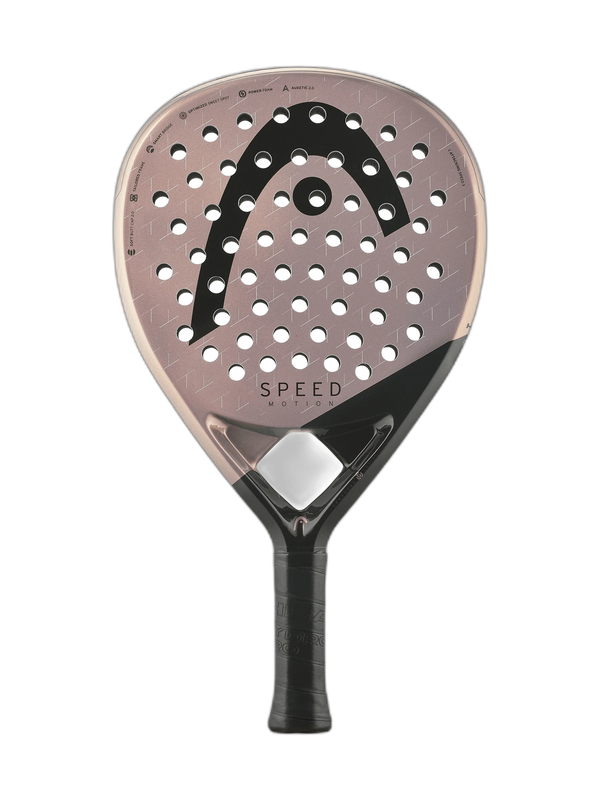
This is the 2025 Speed Motion, with a declared 355 g weight, teardrop head, Hybrid Woven face and Power FOAM. That declared weight is not a measurement of the racket after your grip and accessories are fitted.
Compared with the HEAD Speed Pro 2025, the profiles favour Motion for preparation and recovery, and Pro for stronger prepared attack. They are separate models, not interchangeable ratings or proof of a measured performance gap.
Shortlist the Speed Motion if quick preparation helps you sustain your attacking game, especially when moving between the back court and the net. Choose the Speed Pro only if you value its stronger prepared attacking emphasis enough to accept more work in recovery. The Motion still needs clean contact when opponents send heavy balls at you.