Adidas
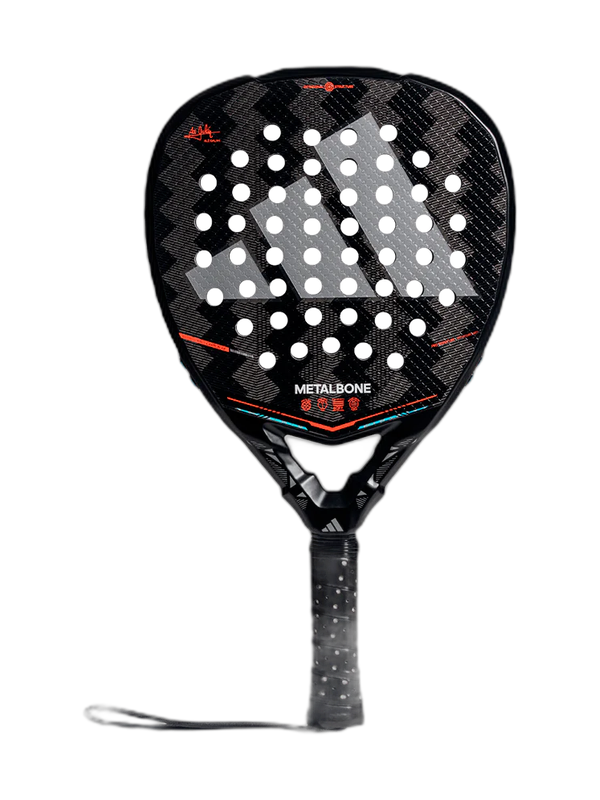
Metalbone 3.3
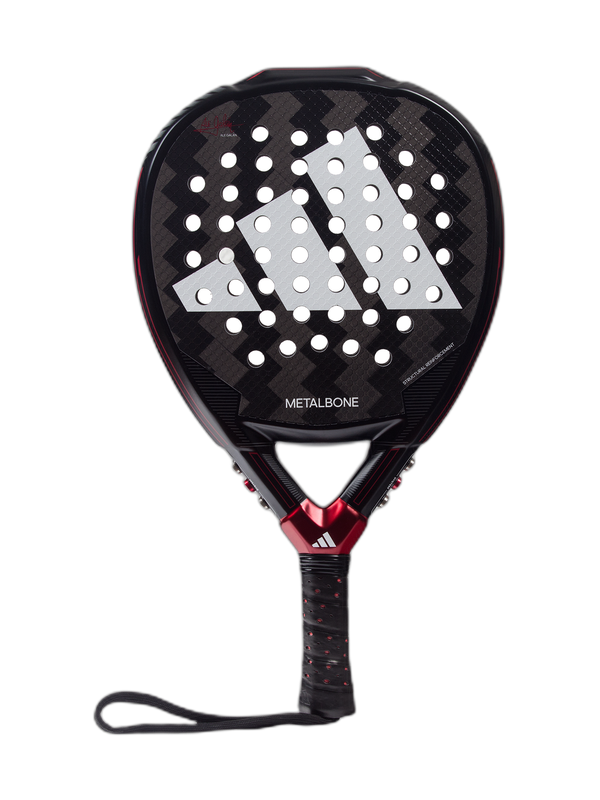
The Adidas Metalbone 3.3 is Galan’s 2024 flagship: a diamond with Carbon Aluminized face and high balance. Power 9 with sweet spot 8 and defence 8 for attackers who still want some margin.
The PADEL CHAPTER score is our overall editorial assessment. The pillars provide additional context. Read how we assess products →
Top 15% of 267 reviewed rackets
Explosive • Control focused • Forgiving
Ale Galán debuted Metalbone 3.3 in 2024 and won his first tournament with it. It is the most accessible model in the 2024 Metalbone lineup, with a softer core than HRD+ but the same aluminised carbon face and distinctive Adidas Weight & Balance System. With Metalbone 3.4 now its successor, 3.3 is sold as an outlet model.
The Adidas Metalbone 3.3 weighs 345–360g (base), in practice around 359–368g with screws fully inserted. It is an oversize diamond with high balance around 260mm. Playing surface is 485 cm² and profile 38mm. The face is Carbon Aluminized 2-to-1, an aluminised carbon layer harder and stiffer than standard carbon. The core is EVA Soft Performance.
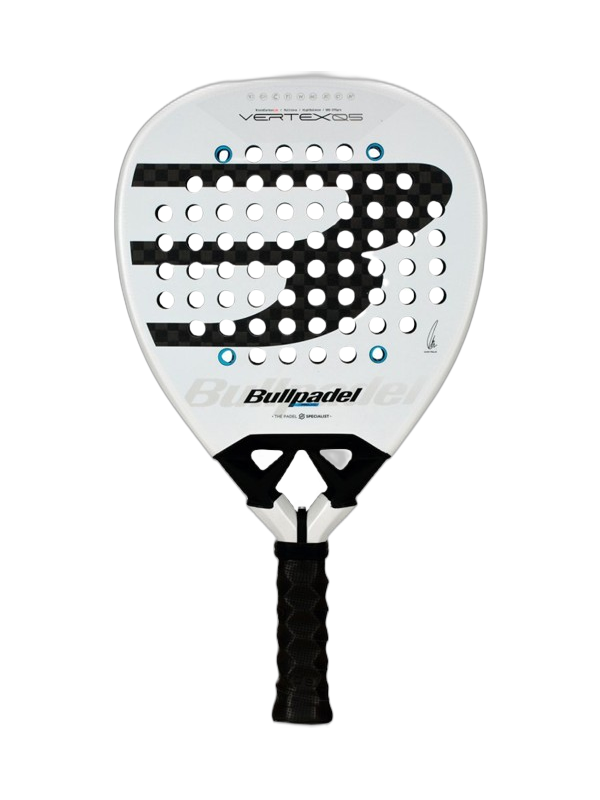
The Weight & Balance System is the distinctive Adidas feature: six removable screws distributed around the frame, adding +12g together. Repositioning or removing screws lets players shift balance. This follows the same philosophy as Bullpadel Vertex 05’s Custom Weight system, and is equally rare in this price segment.
Note: 3.3 is a 2024 model. Metalbone 3.4 is the current successor (2025). The 3.4 has different screw positions, a smaller sweet spot and longer handle; playing character differs. The 3.3 is more forgiving; 3.4 more power-focused.
Metalbone 3.3’s strength is not just power, but what it does at lower swing speeds. Rebound is 9.5/10: the ball leaves the racket at high speed even when swing speed is low. That is why several reviewers describe Metalbone 3.3 as “comfortable in the back of the court”, an unexpected attribute for a racket associated with a pro attacker.
Attacking performance is strong: not the absolute maximum, but consistently near the top, with power 8.6–9/10 across sources. Overheads and volleys perform reliably. Roberto Cardi calls “amazing bajadas” a particular strength: bajada directly benefits from high rebound and broad sweet spot.
The sweet spot is a deliberate design choice distinguishing 3.3 from HRD+. EVA Soft Performance core enlarges the effective zone: sweet spot is 8/10. Fabio Ferro: “a complete racket that does not penalise poor technique.” This is what you expect from the most accessible model in a power series.
Spin potential: an honest explanation of the discrepancy. Standardised spin measurement gives 5.0/10; reviewers assessing playing feel reach 9/10. Both are correct within their own frameworks: the first protocol measures actual spin production, the second assesses surface texture and playing feel. The practical conclusion: Metalbone 3.3 generates average spin for its category. If spin is a primary component of your style, there are better options.
Comfort is 7/10. The aluminised carbon face gives stiff playing feel; EVA Soft core cushions partly but does not fully compensate. Metalbone Protector Tape and Smart Holes Curve provide some extra cushioning, but this is not a comfort racket.
Yes, availability permitting. The 3.3 and 3.4 differ in playing character: 3.3 has a broader sweet spot and more forgiveness; 3.4 focuses more on power and has a longer handle. At the current clearance price of €180–€210 (vs. €380 RRP), 3.3 is an excellent racket at a heavily reduced price. A new 3.4 costs around €380. The choice depends on availability and whether you prefer forgiveness or maximum power.
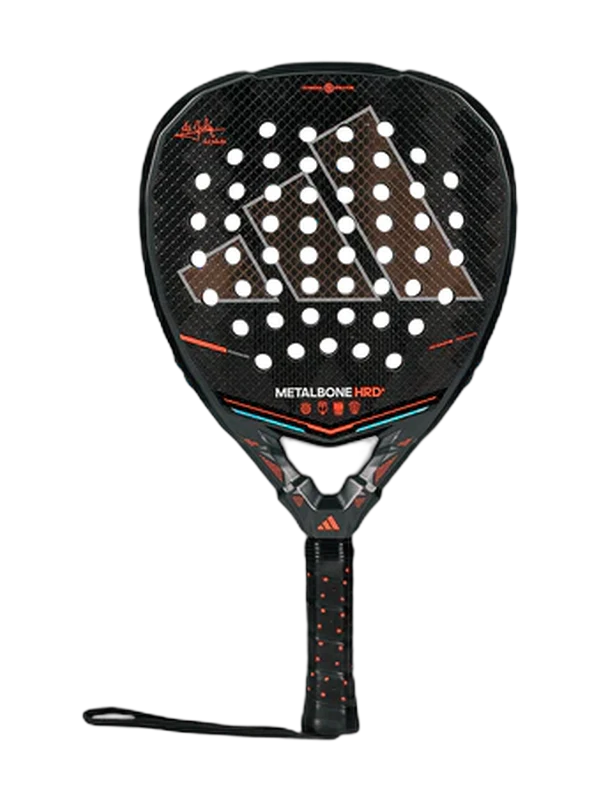
Both have the same shape, face and Weight & Balance System. The key difference is the core: 3.3 has EVA Soft Performance (softer) for a larger sweet spot and more comfort; HRD+ has EVA High Memory (harder) for more power and stiffer response at high swing speed. The 3.3 is for experienced players; HRD+ for experts/pros deliberately choosing the stiffer response.
Partly. Source analysis reports 5.0/10 under a standardised test protocol and 9/10 for an assessment based on surface texture and playing feel. These scores measure different aspects. The conclusion: Metalbone 3.3 is not a spin racket. Players whose style relies heavily on spin are better served by a rougher surface texture.
For players with solid fundamentals, KNLTB 4–6. The 3.3 is the most accessible model in the 2024 Metalbone series (softer core than HRD+), but still requires attacking play and comfort with diamond shape. Beginners or defensive players are better served by a lighter teardrop racket.
The Weight & Balance System consists of 6 removable screws adding +12g to the racket together. Removing or repositioning screws elsewhere in the frame lets players adjust balance and total weight. This is the same function as Bullpadel’s Custom Weight system, a rare feature in this segment making playing character more personal.
Advantages
Exceptional rebound (9.5/10 according to source analysis), high ball speed even at lower swing speed, ideal for defence and bajadas
Generous sweet spot for a power diamond (8/10), more forgiving than most rackets in this segment
Good control on attacking balls (8/10), more versatile than the power-diamond category typically offers
Weight & Balance System (+12g adjustable), comparable to Bullpadel’s Custom Weight; rare in this segment
At current clearance price (€180–€210), one of the strongest buying arguments in the power-diamond category
Considerations
Limited spin potential, not the racket for spin-based attackers
Comfort 7/10, the aluminised carbon face is stiff at impact; the soft core cushions but does not fully neutralise it
2024 model, Metalbone 3.4 is the current successor; outlet stock is limited
Small handle (110mm), may be uncomfortable for larger hands
What you will notice as a player
The smash gets plenty of easy power; you do not need a full follow-through to put the ball away.
The racket helps in defense: a calm swing sends balls off the glass deep again.
The sweet spot offers forgiveness: slightly imperfect contact loses little accuracy.
At the net you react a little more slowly: the weight sits forward, so quick adjustments take more effort.
No pronounced weakness, but no single shot where the racket particularly stands out either.
Which shots are affected most?
| Situation | What will you notice? |
|---|---|
| Defense | Plenty of help: the low balance and generous sweet spot return balls off the glass calmly and deep. |
| Volley | Comfortable and stable; aiming is easy and you keep the ball low. |
| Bandeja | Very easy to control: the ball stays low and predictable, ideal for controlling the court. |
| Vibora | Enough bite for a quick brushing shot with some acceleration of your own. |
| Smash | Its strongest point: maximum power with little effort, sending the ball away like a rocket. |
| Block | The forward weight makes quick blocks more demanding than with an agile racket. |
| Off-center ball | Forgiving: just outside the sweet spot you lose little and the ball stays on course. |
Well suited to
This racket is likely to suit you if you…
want more power and strength in your smash
like to play an attacking, explosive game
want plenty of help from your racket
have a sensitive arm and need cushioning
This racket may disappoint if you…
want a light and agile racket
want to react quickly to hard-hit balls
You will probably appreciate this racket if you…
- •want to finish points with power from the back of the court;
- •value an explosive smash and vibora more than comfort;
- •want a racket that helps in defense;
- •want a forgiving racket with a generous sweet spot;
You may run into limitations if you…
- •value quick hands at the net more than power;
- •want a pronounced specialist rather than an all-round racket;
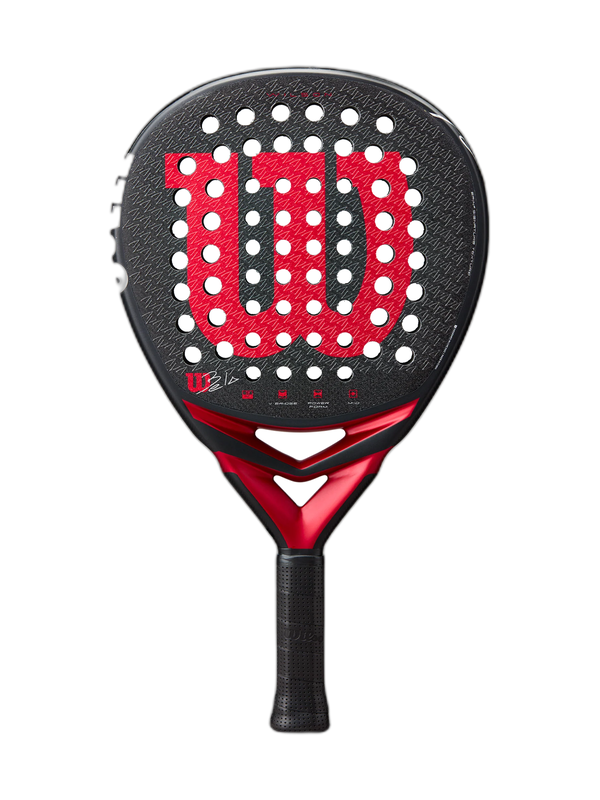
| Metalbone 3.3 | Bullpadel Vertex 05 | Wilson Bela V3 2025 | |
|---|---|---|---|
| Power | 9 / 10 | 10 / 10 | 8 / 10 |
| Control | 8 / 10 | 8 / 10 | 9 / 10 |
| Sweet spot | 8 / 10 | 8 / 10 | 9 / 10 |
| Comfort | 7 / 10 | 7 / 10 | 7 / 10 |
| Forgiveness | 8 / 10 | 7 / 10 | 6 / 10 |
| Defence | 8 / 10 | 7 / 10 | 6 / 10 |
| Spin | 5 / 10 | 6 / 10 | 7 / 10 |
| Price (NL) | €180–210 | €247–306 | ~€200 |
Similar rackets
Rackets with a similar playing character for the same type of player.
Same series
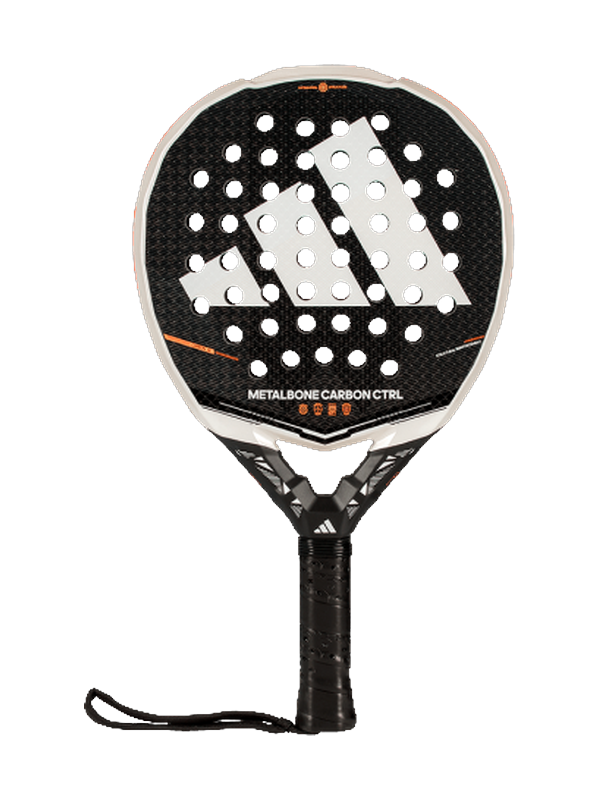
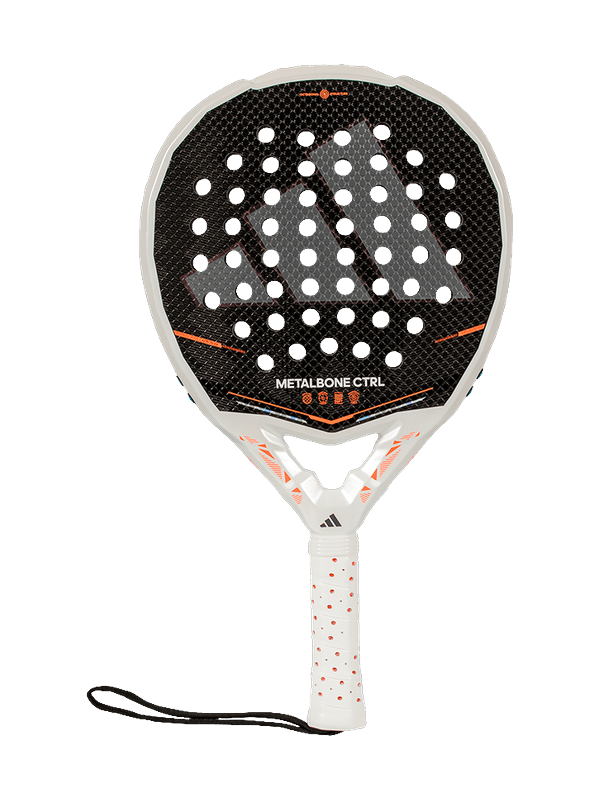
Other rackets from the same product line.
Personal advice
Not sure whether this racket suits you?
Answer 5 questions about your level, playing style and budget to get a personal recommendation in less than 2 minutes.
More on PADEL CHAPTER
Indicatieve marktprijs
€180 ·